Are you wondering which city to move to for an expatriation to Vietnam in 2026?
Are you hesitating between Hanoi, Da Nang or Ho Chi Minh City, the bustling metropolis of southern Vietnam?
Every year, thousands of entrepreneurs, freelancers, employees and digital nomads decide to move to Vietnam. And very often, it is Saigon (Ho Chi Minh City) that wins them over.
Why? Because the city concentrates a unique energy in Southeast Asia: a rapidly growing economy, an extremely dynamic international scene, a world-renowned food culture and a cost of living that remains very accessible compared to most major Western cities.
- But what is life really like in Ho Chi Minh City today?
- What budget should you plan for to settle there?
- Is it easy to find accommodation?
- How much do restaurants, transportation or leisure activities cost?
- And above all: is Saigon still a good destination for expatriates in 2026?
After more than ten years living and working in Ho Chi Minh City, the KNOK STUDIOS team has witnessed the city evolve at an impressive pace: new international neighborhoods, a booming food scene, modernized transport systems and the arrival of a growing number of expatriates from all over the world.
In this article, we offer you a complete guide to understanding life in Saigon in 2026: food costs, restaurant prices, rents, transportation, leisure, healthcare and overall quality of life.
To provide you with the most realistic perspective possible, we will rely both on our daily experience on the ground and on the updated data from Numbeo, a global reference for comparing the cost of living between major cities.
So, how much does life in Ho Chi Minh City really cost today? And most importantly: is Saigon still one of the best cities in Asia for expatriates?
Let’s find out together.
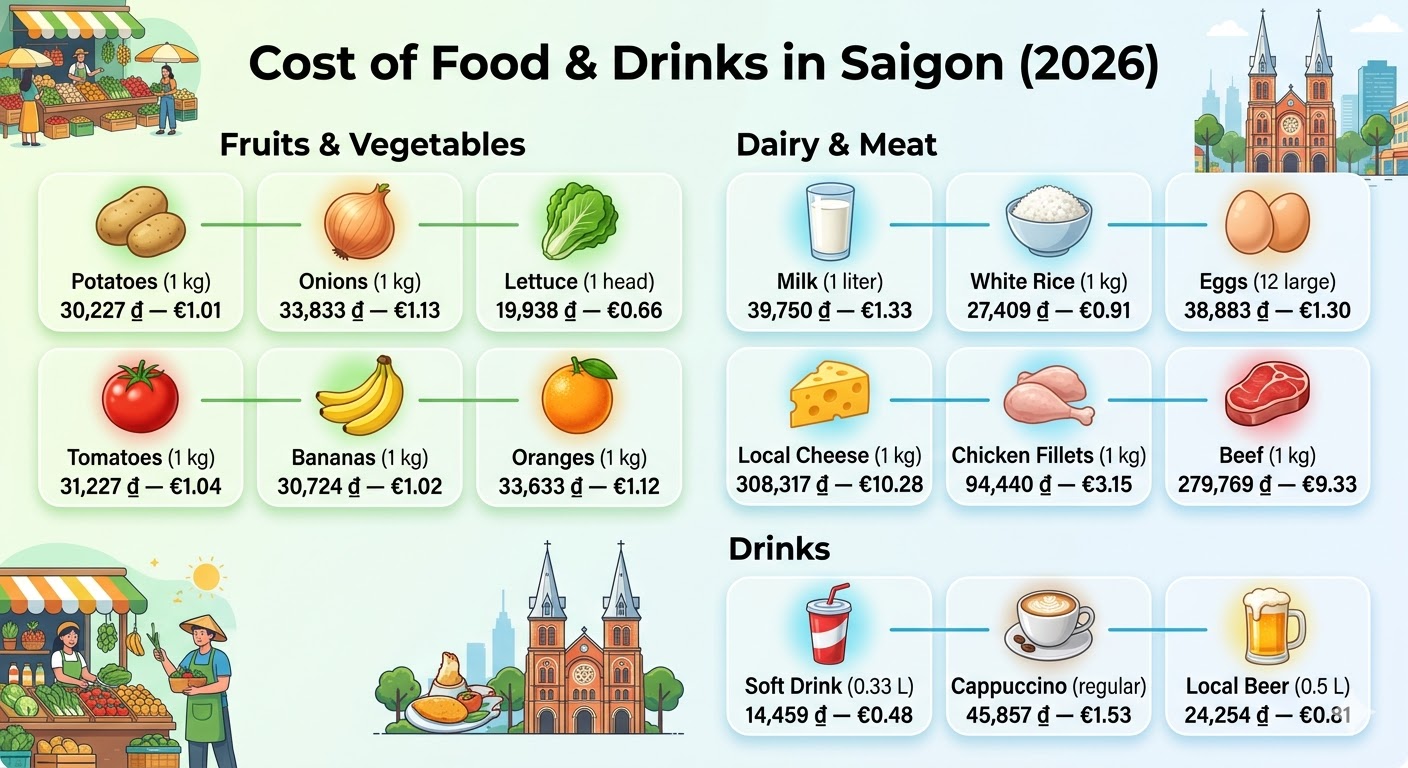
Cost of Food and Drinks in Saigon
Let’s start with the base of Maslow’s hierarchy of needs. In Saigon, culinary possibilities are endless. Whether you are a foodie who enjoys dining out or someone who prefers cooking delicious meals at home, there is no doubt that you will find plenty to enjoy in Saigon.
International restaurants are everywhere, meaning you can easily find most of the French specialties you might miss, from simple family dishes to refined cuisine.

Is grocery shopping expensive in Ho Chi Minh City?
Several factors must be taken into account. Depending on the neighborhood (which we will discuss later), the type of store (small shops or large supermarkets), or the content of your basket (local or imported products), prices may vary.
However, most people usually do their weekly or monthly grocery shopping at stores such as Winmart, TopsMarket or Annam Gourmet, and complete their purchases at the many convenience stores (Family Mart, 7/11, GS25, etc.).
Prices of local fruits and vegetables in Saigon
If you choose to consume local products, the bill should be relatively easy to digest. In 2026 for example:
| Product | Average price |
|---|---|
| 1 kg of potatoes | 36,000 VND (~€1.20) |
| 1 kg of onions | 39,000 VND (~€1.30) |
| 1 kg of tomatoes | 36,000 VND (~€1.20) |
In fact, Vietnamese agriculture is rich enough to provide a wide variety of fruits and vegetables all year round, often tastier than those found in Europe and at very affordable prices.
Even for typically “European” foods such as pumpkins, zucchinis or eggplants, you will easily find what you are looking for.
Not to mention the abundance of tropical fruits to discover:
- rambutans
- dragon fruit
- durians
- mangosteens
- mangoes
Prices of French foods in Saigon
Among other foods produced in Vietnam that might surprise you are:
- cheese (with Laughing Cow being almost a religion here)
- cold cuts
- bread
- foie gras
- chocolate
- strawberries
- and even wine
For all these French specialties, you will generally pay prices similar to those in France, sometimes slightly higher when imported. For example in 2026:
| Product | Average price |
|---|---|
| Baguette | 10,000 – 30,000 VND (€0.30 – €1.00) |
| Imported cheese | 300,000 – 600,000 VND/kg (€10 – €20) |
| Cold cuts | 350,000 – 700,000 VND/kg (€12 – €23) |
The quality is generally satisfactory, and it is entirely possible to eat “food from home” in Vietnam at relatively affordable prices compared to the rest of Asia.
Prices of meat and fish in Saigon
Local meats are generally of satisfactory quality, particularly chicken and pork. In 2026, average prices are approximately:
| Product | Price |
|---|---|
| Chicken | 105,000 VND/kg (~€3.50) |
| Pork | 120,000 VND/kg (~€4) |
| Imported beef | 270,000 – 360,000 VND/kg (€9 – €12) |
For beef, Australian or American products are often preferred, which explains the higher price.
The supply of fish and seafood is very large and generally cheaper than in Europe, as Vietnam has an extremely productive aquaculture industry. Products such as squid or octopus are easy to find and remain relatively inexpensive.
Prices of imported foods in Saigon
The most expensive foods are naturally those that must be imported:
- apples
- cherries
- kiwis
- cereals
- ice cream
- desserts
- fruit juices
- international sauces
These products are generally 20 to 50% more expensive than in Europe, due to transportation costs and import taxes.
Prices of alcoholic drinks in Saigon
When it comes to alcohol, Vietnam now offers a relatively wide selection. Beer is of course the most consumed alcohol in the country, with popular local brands such as Saigon Beer, Bia Hanoi or 333, widely available in restaurants and street bars.
The country is also developing its own spirits production. One example is Sampan Rhum, a Vietnamese agricultural rum produced in the Quang Nam region that is gradually gaining popularity.
On the wine side, the region of Dalat has been producing affordable local wines for several years, which are easy to find in stores (and can also be used for cooking).
Here are some average prices observed in 2026 in supermarkets and stores:
| Product | Average price |
|---|---|
| Local beer (33cl) | 15,000 – 25,000 VND (€0.50 – €0.80) |
| Imported beer (33cl) | 30,000 – 50,000 VND (€1 – €1.70) |
| Local wine (bottle – Dalat) | 120,000 – 210,000 VND (€4 – €7) |
| Imported wine (bottle) | 360,000 – 900,000 VND (€12 – €30) |
| Local rum (ex: Sampan) | 450,000 – 900,000 VND (€15 – €30) |
| Imported rum | 600,000 – 1,500,000 VND (€20 – €50) |
Overall, you will also find most international spirits (vodka, gin, whisky, tequila) at prices relatively close to those in Europe, although some imported bottles may be slightly more expensive due to taxes.
What are the restaurant prices in Saigon?
Prices of local restaurants and street food in Saigon
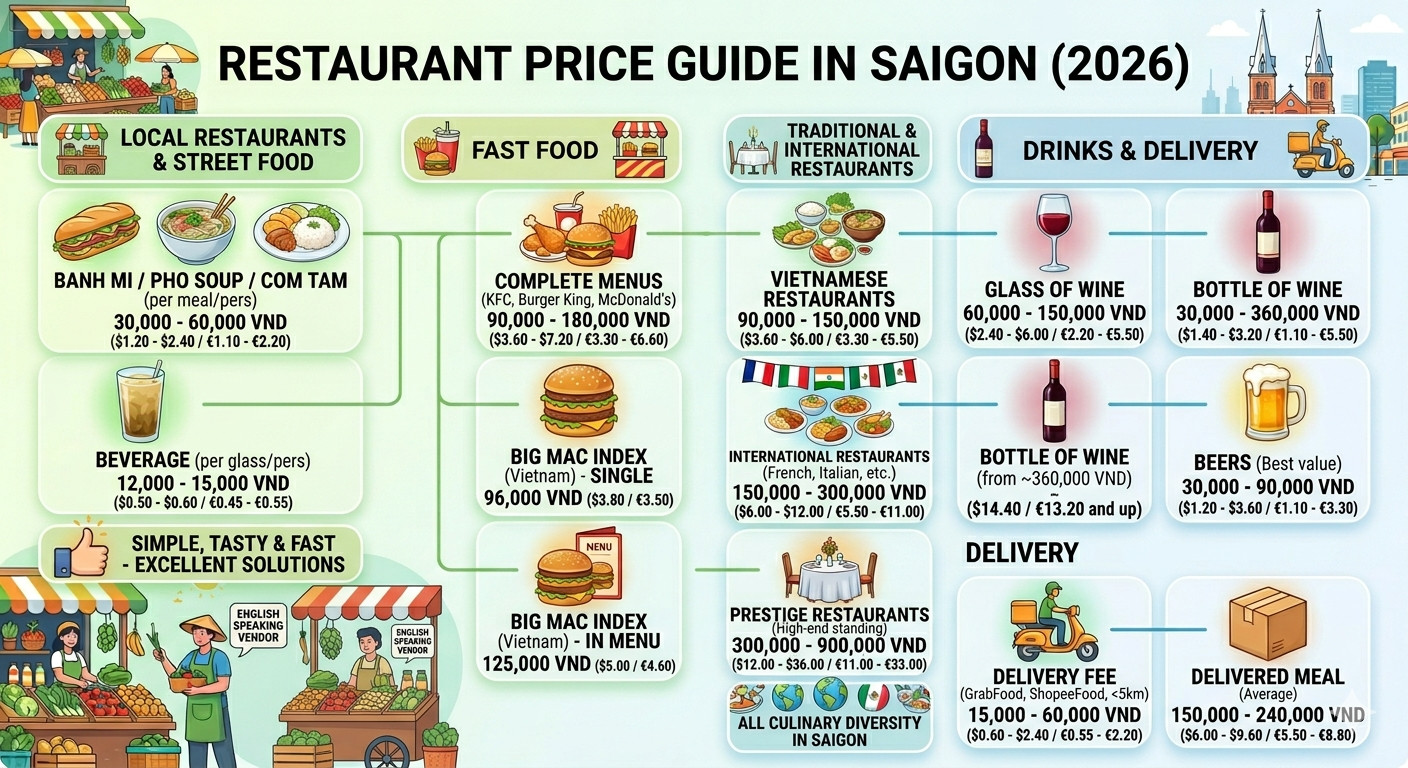
If you want to eat cheaply in Vietnam, options are plentiful: Banh Mi sandwiches, Pho soups with chicken or beef, rice dishes with meat (Com Tam), and other local specialties will cost only 30,000 to 60,000 VND (€1 to €2) per meal per person in street restaurants. Simple, tasty and quick, they are excellent options worth trying.
Expect to pay around 12,000 to 15,000 VND (€0.40 – €0.50) for a drink.
Fast food restaurant prices in Saigon
Fast food chains (KFC, Burger King, McDonald’s and others) offer meals ranging from 90,000 to 180,000 VND (€3 to €6), which is much more expensive than local street food.
How could we not mention the Big Mac Index in Vietnam? In 2026, the famous burger sells for around 96,000 VND (€3.20) alone, and around 125,000 VND (€4.20) as a combo meal.
Prices of traditional restaurants in Saigon
For more “traditional” restaurants, you can eat in Vietnamese establishments for 90,000 to 150,000 VND (€3 to €5), and in international restaurants for between 150,000 and 300,000 VND (€5 to €10) in most neighborhoods of the city.
Again, diversity is everywhere: while you will of course find classics such as French, Italian, Indian or Mexican cuisine, Saigon also offers Mediterranean, Korean, Japanese or Brazilian restaurants.
In short, Ho Chi Minh City offers all the culinary diversity you could wish for, especially if you live in an “international” neighborhood.
The most prestigious restaurants typically offer meals between 300,000 and 900,000 VND (€10 to €30) per person on average.
Price of alcoholic drinks in Saigon
While they are significantly more expensive to purchase in stores (often 30 to 100% higher), glasses and bottles of international wines tend to display prices in restaurants that are fairly similar to those found in Europe.
You can therefore expect to order:
- a glass of wine for around 60,000 to 150,000 VND (2 to 5 €)
- a bottle of wine starting at about 360,000 VND (12 €)
The same applies to spirits, which have similar price levels. Only beer remains significantly cheaper, often around 30,000 to 90,000 VND (1 to 3 €) depending on the restaurant’s standard.
The cost of food delivery in Saigon
Food delivery apps are extremely popular in Saigon, especially GrabFood and ShopeeFood.
For deliveries, prices are generally the same as in restaurants, with additional delivery fees ranging from about 15,000 to 60,000 VND (0.50 to 2 €) for distances up to 5 kilometers.
You can therefore have meals delivered for an average of 150,000 to 240,000 VND (5 to 8 €).
Cost of housing in Saigon
How much does rent cost in Saigon?
Here it is important to distinguish what could be called “Vietnamese districts” (central ones such as District 4, District 5, District 8, District 10, or more peripheral areas such as District 9 and Thu Duc) from more westernized districts: District 1, District 2, and District 7.
Monthly rents (Expat districts)
- Shared accommodation room: 6,000,000 to 10,500,000 ₫ (200 to 350 €)
- Studio or 1-bedroom apartment: 12,000,000 to 18,000,000 ₫ (400 to 600 €)
- Traditional house (2–3 floors, 3 bedrooms): 18,000,000 to 24,000,000 ₫ (600 to 800 €)
- 3-bedroom apartment (Serviced residence): 24,000,000 to 36,000,000 ₫ (800 to 1,200 €)
- Villa (3 to 6 bedrooms): from 42,000,000 ₫ (1,400 to 4,000 €+)
There are therefore housing options for all price ranges in Saigon.
For other less central or less “international” districts, prices can be 20 to 50% lower for similar properties compared to the prices above. There are therefore good opportunities for those willing to live slightly outside the main expatriate areas or in more traditional neighborhoods.

How much do monthly utilities cost in Saigon per person / household?
- Internet subscription: 300,000 to 450,000 ₫ (10 to 15 €)
- Cable TV: 300,000 ₫ (10 €)
- 4G/5G mobile phone plan: 90,000 to 300,000 ₫ (3 to 10 €)
- Electricity: 600,000 to 900,000 ₫ (20 to 30 €)
- Running water: 120,000 to 240,000 ₫ (4 to 8 €)
- House cleaning service (per hour): 60,000 to 90,000 ₫ (2 to 3 €)
Do not forget to also consider the cost of your visa if it is not covered by your employer. Prices vary, but you should expect a budget of around 400 to 600 € per year (12,000,000 to 18,000,000 ₫).
How much does a house cost in Vietnam?
In major cities, and particularly in Ho Chi Minh City, in districts closest to the city center, the average apartment price per square meter is now around 105,000,000 VND (3,500 €). This price can easily double for luxury real estate developments or prime locations in the city center (for example District 1 in Ho Chi Minh City), reaching 210,000,000 VND (7,000 €).
As for houses, prices are generally significantly higher, often exceeding 360,000,000 VND (12,000 €) per square meter in Saigon.
In Hanoi, property prices have been catching up with those in Saigon but remain around 20% to 25% cheaper (in 2026 the average price per square meter is about 81,000,000 VND / 2,700 €). In the rest of the country, prices are typically at least 50% lower.
Cost of education in Saigon
How much does a school year cost in Saigon?
Education is probably one of the most expensive expenses in Ho Chi Minh City, especially if you plan to enroll your children in an international school.
For most French expatriates, the Lycée Marguerite Duras remains the best compromise. Although the school is located relatively far from the city center, its fees are very affordable compared to other international schools. The cost of one school year in 2026 is around 165,000,000 VND (5,500 €) per child.
Please note that some scholarships may be available. English-speaking international schools, on the other hand, charge between 300,000,000 VND and 1,050,000,000 VND (10,000 € to 35,000 €) per year per child.
For an overview of international schools in Saigon, read this article.
How much does a private lesson cost in Saigon?
Education is extremely important for both Vietnamese and expatriate families. As a result, many teachers offer private or group lessons. Whether for language learning or academic tutoring, prices usually range between 15 and 40 € per hour.
Healthcare costs in Saigon
It can be difficult to obtain a clear overview of healthcare costs in Saigon. Medical infrastructure exists, and both Vietnamese and international hospitals provide fairly good treatment options overall.
However, there is a very large price difference between local and international facilities. We strongly recommend taking out health insurance if you plan to use international hospitals, as their prices are significantly higher than those in France. There is also a French hospital in Saigon.
Costs in Vietnamese hospitals:
- Consultation: 45,000 VND (1.5 €)
- X-ray: 300,000 – 450,000 VND (10-15 €)
- Hospital stay (per night): 900,000 – 1,500,000 VND (30-50 €)
Costs in an international hospital:
- Consultation: 2,400,000 VND (80 €)
- X-ray: 8,400,000 VND (280 €)
Learn more about the French Hospital of Saigon
Daily expenses in Saigon
- Cinema ticket: 120,000 to 150,000 VND (4 to 5 €)
- Haircut: 60,000 to 150,000 VND (2 to 5 €)
- Gym membership: from 450,000 VND (15 €+)
- Massage (1 hour): 300,000 to 450,000 VND (10 to 15 €)
- Scooter rental (monthly): 1,200,000 VND (40 €)
- One liter of gasoline: 20,000 to 33,000 VND (0.60 to 1.10 €)
- Taxi ride (5 km): 150,000 VND (5 €)
- Scooter ride (5 km): 60,000 VND (2 €)
- Pack of cigarettes: 30,000 VND (1 €)
- Custom-made shirt: 600,000 VND (20 €)

Quality of life in Saigon
After reviewing the main costs of living in Ho Chi Minh City, let’s now look at what life there actually offers. Culture, nightlife, social life, and nearby travel opportunities all contribute to the city’s appeal.
In early 2026, Saigon continues to evolve rapidly and offers one of the most dynamic lifestyles in Southeast Asia.
Accessibility and travel around Saigon
One of the major advantages of living in Saigon is its proximity to many Southeast Asian airports with direct and relatively affordable flights.
Tan Son Nhat Airport remains one of the few major airports in the world located very close to the city center, making it accessible in roughly 30 minutes from most districts of Ho Chi Minh City.
However, 2026 also marks the gradual rise of the new international airport Long Thanh, which is beginning to handle part of the international traffic and can be reached in about 45 minutes via new expressways.
International flight prices from Saigon
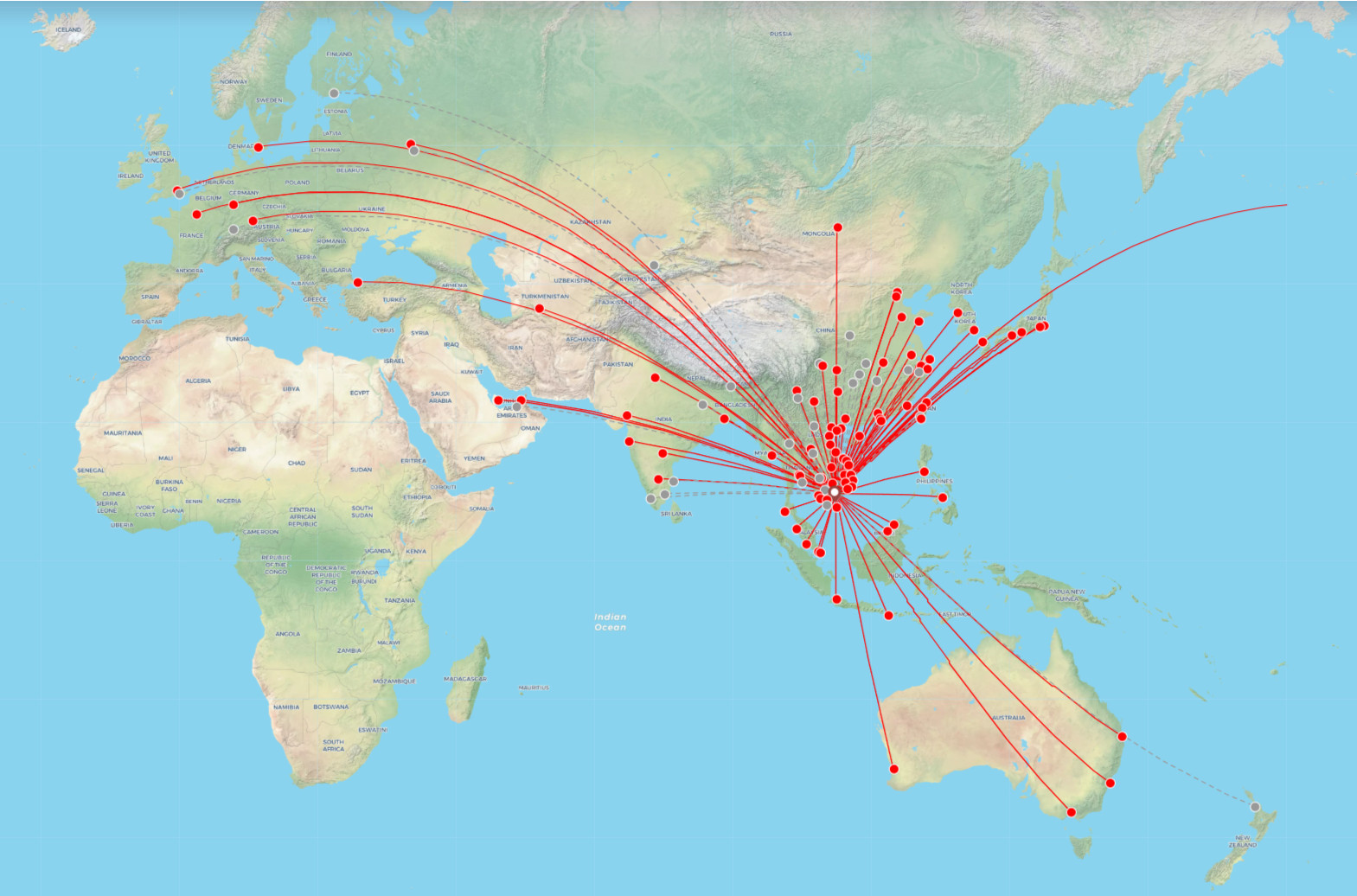
Hong Kong, Singapore, Taipei, Bangkok, and Kuala Lumpur are all major destinations located between 1 and 3 hours away, with round-trip flights typically costing between 3,000,000 and 6,000,000 VND (100 to 200 €).
Many other destinations such as Japan, Australia, and India are also accessible via direct flights within 4 to 5 hours, with fares generally ranging from 9,000,000 to 15,000,000 VND (300 to 500 €).
Domestic flight prices from Saigon
Vietnam has many airports and tourist destinations that are easily accessible from Ho Chi Minh City.
Beach lovers can reach destinations such as Phu Quoc Island, Nha Trang, Quy Nhon, or Da Nang in less than an hour of flight time.
Nature lovers may prefer destinations such as Dalat or Pleiku in the south, or Hanoi and its surrounding regions in the north, including Ninh Binh, Halong Bay, and the northern mountain areas.
Domestic flights remain relatively affordable, with round-trip tickets generally ranging between 1,500,000 and 4,500,000 VND (50 to 150 €).
Nightlife and excursions around Saigon
The range of weekend getaways within 2 hours of Saigon by car has significantly improved in 2026. Although Saigon is relatively close to the coastline, seaside destinations outside the metropolis used to be somewhat limited in appeal. Vung Tau can be pleasant for a weekend, but travelers now generally prefer the beaches of Ho Tram (reachable in about 1h45 via the new highway) or Phan Thiet / Mui Ne, whose travel time has dropped to around 2h15 thanks to recent infrastructure upgrades.
The Mekong Delta and the Cat Tien region also offer interesting opportunities for exploration. However, to truly enjoy nature, you will generally need to drive at least two hours from Saigon.
Transportation in Saigon
Mobility in Saigon is undergoing a real transformation in 2026. Long dominated by the endless flow of scooters, the city is diversifying its transportation options to address congestion and pollution.
- The Metro (Line 1): This is the major event of the decade. The line connecting Ben Thanh to Suoi Tien is now the fastest and most comfortable way to cross the city. A trip costs between 12,000 and 24,000 VND (0.40 to 0.80 €) depending on the distance. It is the ideal option to avoid both the heat and traffic jams of the city center.
- Taxis and ride-hailing (Grab, Xanh SM): Grab remains the essential app for booking a car (GrabCar) or motorbike (GrabBike). In 2026, the electric taxi fleet Xanh SM (VinFast) has become increasingly common, offering a quiet and environmentally friendly service. Expect to pay around 150,000 VND (5 €) for a 5 km car ride and 60,000 VND (2 €) for a motorbike taxi.
- Bus Network: Although less popular with expatriates, the network has been modernized with the large-scale introduction of electric buses VinBus, which are more comfortable and reliable. Tickets are extremely cheap, around 7,000 VND (0.25 €).
- The Water Bus: For a more scenic experience, the river bus on the Saigon River connects District 1 to Thu Duc (District 2/9). It’s a great option for just 15,000 VND (0.50 €) to enjoy the skyline without any stress.
Nightlife in Saigon
This is undoubtedly one of the metropolis’ greatest strengths. Saigon is a city that never sleeps, active seven days a week, where the party often continues until dawn. The number and variety of venues is astonishing, catering to every budget—from the modest plastic stools of street-side “Bia Hoi” spots to ultra-exclusive clubs in District 1.
By 2026, the nightlife geography has evolved. While Bui Vien remains the epicenter of neon chaos and backpacker parties, new hubs of sophistication have emerged. The peninsula of Thu Thiem now hosts world-class rooftop bars offering panoramic views of the illuminated skyline, while Thao Dien (District 2) has become the hotspot for “speakeasy” cocktail bars and craft microbreweries.
Whether you’re looking for the energy of a District 1 nightclub or the breeze of a riverside terrace, Saigon promises electrifying nights unlike anywhere else.
Safety in Saigon: Statistics and Reality
Saigon remains one of the safest major cities in Southeast Asia for residents and travelers. In 2026, Vietnam still ranks among the safest countries in Asia according to the Global Peace Index. Violent crime is statistically extremely low, far below the averages seen in most major Western capitals.
However, visitors should still remain cautious about petty crime. Snatch thefts (phones or bags grabbed by passing scooters) remain the main issue, accounting for around 70% of incidents reported by expatriates in tourist districts (D1 and D3). Statistics from 2025 indicate a 15% decrease in such offenses thanks to the widespread deployment of urban surveillance cameras.
The standard advice still applies: avoid using your phone near the roadside and wear your bag across your body on the side opposite traffic.
Leisure and Sports in Saigon
With a population approaching 10 million inhabitants, the city offers an enormous variety of leisure activities that have modernized rapidly. Massive shopping malls such as Vincom Center, Estella Place, or Takashimaya are no longer just retail destinations; they have become entertainment hubs featuring IMAX cinemas, ice skating rinks, virtual reality centers, and children’s edutainment parks.
The sports sector has also experienced a real boom in 2026:
- Padel & Tennis: Many clubs have opened in Thu Duc and District 7, with padel becoming the number one social sport among the expatriate community.
- Golf: With internationally renowned courses such as Tan Son Nhat Golf Course (located in the heart of the city) and Song Be Golf Resort, Saigon is a paradise for golf enthusiasts.
- Wellness: The fitness industry has diversified between low-cost gyms and premium clubs (California Centuryon) offering yoga, pilates, and infinity pools.
- Outdoor activities: For thrill seekers, indoor climbing centers (such as Saigon Outcast) and high-end karting complexes complement an already extensive range of activities.
Culture in Saigon
This is unfortunately one of the aspects often considered weaker compared to the city’s economic dynamism. If you come from a major European metropolis, you might find Saigon’s institutional cultural scene somewhat limited. The number of major national museums remains relatively small, and international touring artists still rarely include the city in their schedules, although the situation is improving in 2026 as Vietnam becomes more connected to global culture.
That said, it would be wrong to say Saigon lacks character. Vietnamese culture can be experienced on nearly every street corner—in its centuries-old pagodas such as Jade Emperor Pagoda or Vinh Nghiem Pagoda, and in its vibrant traditional markets.
The city also boasts a rich colonial architectural heritage, including the Saigon Opera House, the Central Post Office, and the Notre-Dame Cathedral (whose restoration is finally nearing completion).
For history enthusiasts, the War Remnants Museum and the Independence Palace remain must-see landmarks.
The contemporary art scene is also gaining momentum in 2026. Venues such as The Factory Contemporary Arts Centre in Thao Dien, Galerie Quynh, and the alternative spaces of Sàn Art contribute to a vibrant local art ecosystem.
For live performances, the “A O Show” at the Opera House has become an internationally recognized production, blending modern circus techniques with traditional Vietnamese rural culture.
Nature and Environment in Saigon
This is another weak point of the city, which suffers from a clear lack of green spaces. As a result, many residents regularly leave Saigon to enjoy nature elsewhere.
There are a few notable parks in the city center — such as Tao Dan Park (a true green lung of District 1), September 23 Park, and the botanical garden (Thao Cam Vien) — but these remain relatively small compared to the standards found in many Western cities.
Larger recreational areas can be found in the outskirts, particularly Crescent Park in Phu My Hung (District 7), popular for riverside walks, and Vinhomes Central Park in Binh Thanh, inspired by New York’s Central Park.
In Thu Duc, the new ecological “Super Park” on the Thu Thiem peninsula is beginning to offer a promising alternative, although many of these areas are not yet fully developed for large-scale family recreation.
The city center remains highly congested and air pollution is a daily reality. In 2026, the Air Quality Index (AQI) frequently ranges between 100 and 160 (“Moderate” to “Unhealthy”), particularly during the dry season. Fine particle concentrations PM2.5 can become uncomfortable over time for more sensitive individuals, despite recent efforts to increase urban greenery and introduce low-emission zones.
Climate in Saigon
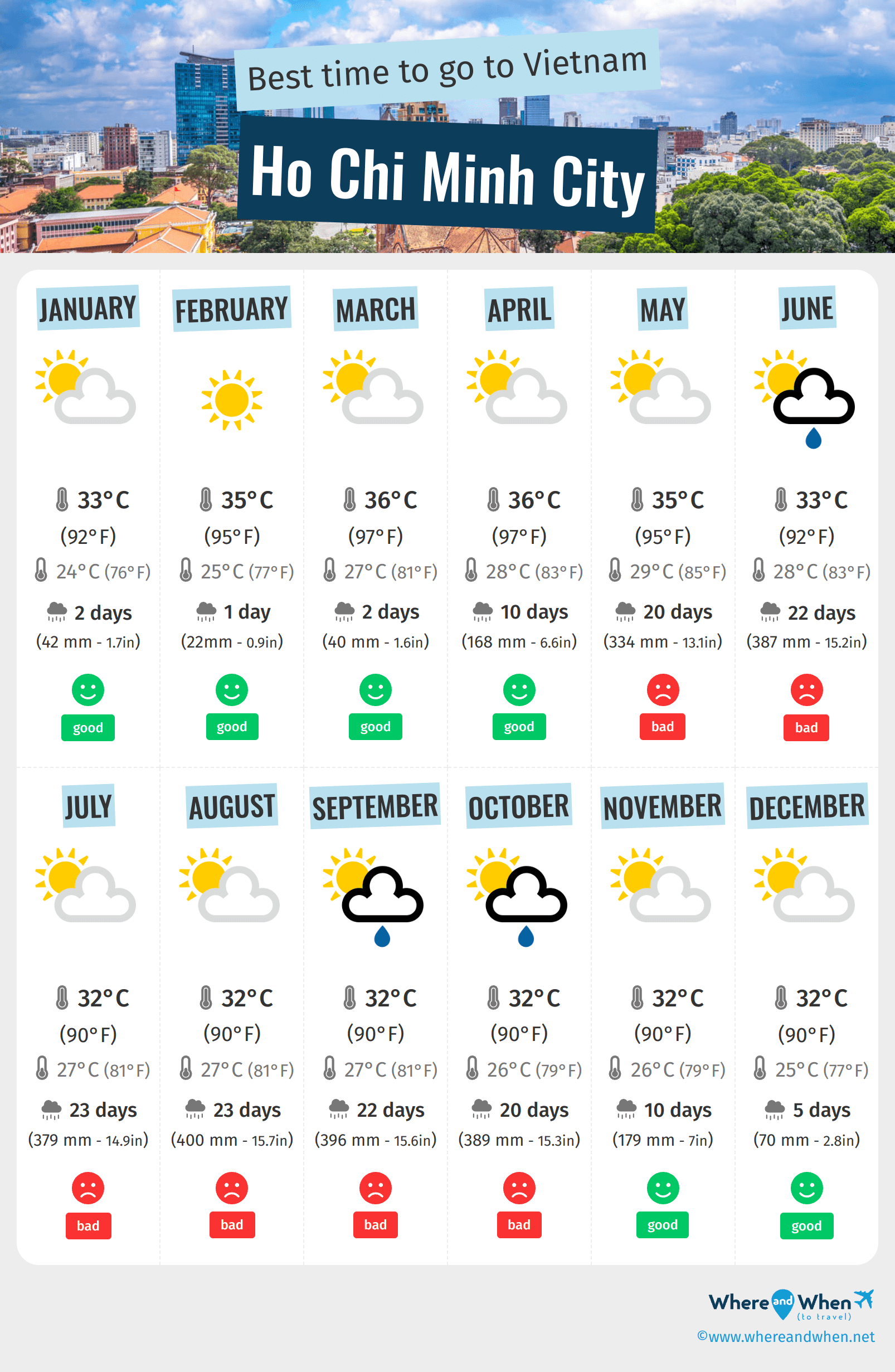
Let’s finish on a positive note (at least for those who enjoy tropical climates): the weather in Saigon is pleasant almost all year round, with stable and warm temperatures that rarely feel overwhelming.
Minimum temperatures usually range around 22–23°C, while maximum temperatures typically reach 32 to 35°C.
During the rainy season, showers are relatively sporadic, usually occurring two to three times per week and lasting between 1 and 4 hours.
Succeeding with your project in Saigon with KNOK STUDIOS
Moving to Saigon in 2026 is an exciting adventure, but one that requires careful preparation and a strong understanding of the local environment. As we have seen, between economic dynamism, transportation innovation, and improving quality of life, the city offers many opportunities—especially for entrepreneurs and creative professionals.
KNOK STUDIOS is not just an observer of this transformation; we have been an active participant for more than a decade. Based in the heart of the metropolis, we have supported dozens of international projects in their expansion into the Vietnamese and global markets. Our dual French and Vietnamese culture allows us to navigate smoothly between Western expectations and local realities.
Do you have a business project? Do you want to digitalize your activity or strengthen your visibility in Southeast Asia? Our agency offers a full 360° range of expertise:
- Branding & Visual Identity: Make a strong impression from day one.
- Website & E-commerce Development: Robust technical solutions adapted to local digital habits.
- SEO & Digital Marketing: Build long-term visibility in a highly competitive ecosystem.
- Strategic Consulting: Benefit from our network and experience within the Saigon business ecosystem.
Don’t let logistical or cultural barriers slow down your ambitions. In 2026, Saigon remains a city of endless possibilities—and KNOK STUDIOS is your trusted partner to turn your vision into concrete success.