With a population having crossed the symbolic milestone of 100 million inhabitants and a digital economy now worth tens of billions of dollars, Vietnam has become the primary growth engine of Southeast Asia.
In this ultra-competitive landscape, simply owning a website is no longer enough. To capture the attention of an increasingly demanding audience, maintaining a dominant presence on the first page of Google and optimizing for new Search Generative Experiences (AI) have become the pillars of any growth strategy.
SEO is no longer just a channel; it is the foundation of your digital assets in Vietnam.
How is the Internet used in Vietnam?
According to Truong Minh Tuan, Minister of Information and Communication, the Internet has become a vital element of daily life for everyone in Vietnam—from factory workers and doctors to students and office employees.
Vietnam first opened up to the Internet about twenty years ago, representing a major milestone for the country’s telecommunications sector. Since then, the number of internet users in Vietnam has grown exponentially.
The leap forward has been spectacular: from embryonic access 25 years ago, the country now counts approximately 80 million internet users, representing a penetration rate nearing 80%. Vietnam has established itself as one of the most connected countries in Asia, driven by massive mobile-first consumption.
In 2026, usage is no longer limited to simple browsing: social commerce, super-apps, and voice search have fundamentally transformed consumer behavior. For a business, failing to optimize for these new trends means being invisible to 4 out of 5 Vietnamese citizens.
Today, every industry in Vietnam is represented online, and even government agencies manage social media accounts to communicate more effectively with the public.
This data highlights that while the Vietnamese online market is full of opportunities, it is also highly competitive. Having a professional website is the baseline. Having a high-performance website that generates traffic is indispensable! To achieve this, we must understand the mechanics of Search Engine Optimization (SEO).

Learn more about our SEO services in Vietnam
What is SEO?
SEO (Search Engine Optimization) refers to all the actions taken to improve rankings on search engines, ensuring your website appears on the 1st page of search results.
SEO is a major aspect of your online development that should never be overlooked. Agencies offering SEO services can help your website rank higher on Google.
In search results, Google displays links to websites it deems relevant. Relevance is measured, for instance, by analyzing the quantity and quality of links from other web pages, among many other factors that we will summarize.
To properly optimize your website, there are numerous steps to follow and technical improvements to implement. Here, you will find examples of solutions that work. However, this list is not exhaustive: more than 200 different criteria are taken into account in Google’s algorithm. Furthermore, this list evolves and adapts almost every single day.
What are the main SEO factors considered by Google?
As previously mentioned, Google evaluates over 200 factors to rank a website.
Today, we talk about “SEO Marketing” because the SEO adjustments made to your site directly drive traffic and conversions. Some of these factors have existed for years, while others result from recent technological breakthroughs. The services of SEO professionals are essential to funneling high-quality traffic to your site.
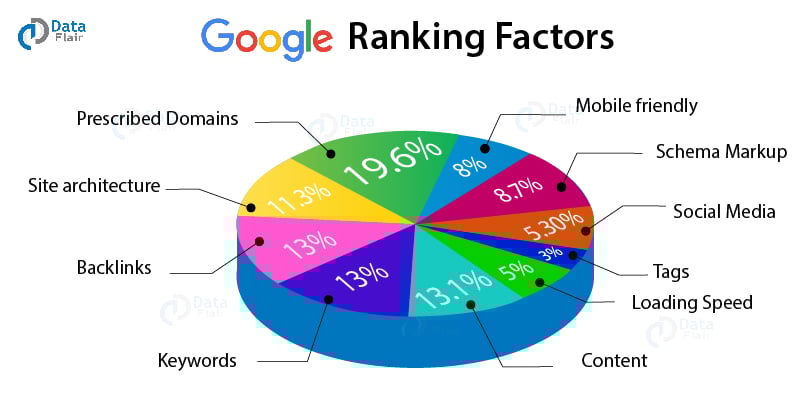
If you follow the general guidelines below, your site will have a strong chance of ranking on Google:
1. From Relevance to Holistic Search Intent
The concept of “relevance” has fundamentally changed. It is no longer about matching keywords in a title with a user’s query. Today, Google uses advanced language models to decode the deep intent behind every search. If a user types “SEO Vietnam,” are they looking for an agency, a tutorial, or market statistics?
To perform well, your content must cover the entire customer journey. A high-ranking site is one that anticipates the user’s next question. This means that beyond answering the initial query, you must build topical authority: treating the subject from every angle (technical, strategic, local) to prove to Google that you are the most comprehensive resource on the subject.
2. E-E-A-T: Google’s Anti-AI Filter
With the explosion of auto-generated content, Google has tightened its trust criteria. The E-E-A-T framework (Experience, Expertise, Authoritativeness, Trustworthiness) has become the ultimate benchmark. The “Experience” element is now crucial: Google prioritizes content that proves the author has real-world, on-the-ground experience.
For an agency in Vietnam, this translates to integrating concrete case studies, original team photos, and analyses based on proprietary data. If your content looks like something any AI could generate without ever setting foot in Saigon or Da Nang, it will be systematically outranked by authenticated experts.
3. The Brand Ecosystem: Mentions, E-reputation, and Social Media
In 2026, SEO is no longer a lonely island. Google doesn’t just analyze what happens on your site; it scans everything said about you elsewhere. These are known as “brand signals.” While backlinks (inbound links) remain vital, they have evolved into what we call Digital PR. A link from an influential media outlet in Saigon or an expert blog carries ten times more weight than a dozen anonymous links.
E-reputation now plays a direct role in your rankings. Google cross-references your business profiles, customer reviews, and even your brand mentions on social media, even without a direct link.
If your brand is active, cited, and searched for by name, Google concludes that you are a trusted player (the “Trust” in E-E-A-T). Social media doesn’t “boost” your positions directly, but it creates a flow of signals and traffic that validates your authority in the eyes of the algorithm.
4. Design and UX/UI: User Experience is the New SEO
It’s time to debunk a myth: we no longer do SEO for robots; we do it for humans that Google observes under a microscope. Design and UX (User Experience) have become ranking factors in their own right. Why? Because Google is now capable of simulating user frustration.
A cluttered site, where the Call-to-Action button is too small on mobile or hidden by a banner, sends immediate negative signals.
The UI (User Interface) must serve clarity. A modern, clean design reduces cognitive load, allowing users to find information faster. In 2026, an “SEO-friendly” site is one where navigation is intuitive: if a user has to think twice to figure out how to contact you, you’ve already lost.
Retention (time spent with actual interaction) is Google’s best quality indicator. Great design isn’t a luxury; it’s a driver for conversion and visibility.
5. Semantic Structuring for AI: The Technical “How-To”
To be cited by Google’s AI (SGE), you can no longer write long, indigestible blocks of text. You must adopt an “Inverted Pyramid” structure within each section:
- The Direct Answer: Start with a concise sentence that answers the question (e.g., “Technical SEO is the foundation of indexing”).
- Supporting Data: Use bullet points or key statistics.
- Deep Dive: Elaborate on the subject for readers who want to go further.
Technically, this requires implementing specific Structured Data (Schema.org). For example, using the FAQPage schema for your Q&As or the Article schema with clearly defined author and publisher properties. By tagging your content this way, you literally provide the “crutch” the AI needs to extract your text and transform it into a voice response or a generative summary.
6. Introduction to Technical SEO: The Building’s Foundation
Everything we’ve mentioned—brilliant content, brand authority, polished design—will be useless if your site’s foundations are unstable. Technical SEO is the language you use to speak directly to Google’s infrastructure.
If a crawler encounters an error, gets lost in a confusing URL architecture, or wastes its “crawl budget” on useless pages, your content will never be indexed, and therefore never seen. Before trying to win over the user, you must ensure that your site’s doors are wide open and the path is perfectly marked for the algorithms.
Focus: The Different Aspects of Technical SEO
Technical SEO focuses on the ability of search engines to crawl your site and index your content. SEO agencies help you improve these criteria, which form the “backbone” of your structure. As specialist Neil Patel puts it: “Without a solid technical foundation, everything else falls apart.”
Technical SEO follows search engine requirements to improve page analysis. It is a constantly evolving field that adapts daily to Google’s new algorithms.
1. Website Speed

Page loading speed—the time it takes for a page to display its content—is among the top 10 SEO ranking factors known to all search engine specialists and SEO consultants. So, how can you improve your website’s loading speed?
Keep your “template” simple
It’s quite straightforward: the more elements you add to your template (code, plug-ins, widgets), the longer your site takes to load. Limit your site’s elements and keep your theme as simple as possible. Making visitors wait for slow-loading pages is never a good practice. The fewer elements on your site, the faster it runs. You should also consider code optimization; again, SEO companies and consultants can optimize your website’s code to make it faster.
Optimize your images
Large images can significantly increase your loading time. Limit the size of your visuals so they are as light as possible with minimal quality loss.
In 2026, beyond JPEG and PNG, we prioritize WebP or AVIF formats, which are far more efficient for the web. To achieve this, you can use websites such as https://imagecompressor.com/ or compression plugins directly on your website. Also, remember to use JPEG for photographs and PNG for graphics.

Limit redirections
We’ve all been there: clicking a link and being redirected to another page. These redirects truly slow down your site speed, especially if there are several in a row.
Furthermore, it is important to design a custom 404 error page. This is the page that appears when a page on your site cannot be found or if a visitor types a wrong URL. If possible, it should reflect your site’s colors and style. De-escalate the situation, perhaps with a touch of humor, and guide them back to your homepage or any other important page. If your 404 page is bland or empty with a default message, your visitor will likely leave your website.
Google Search Console can help you detect errors on your site. This tool will show you 404 errors. An SEO agency can help you fix all these issues.
2. Mobile Compatibility

We are no longer in the era of “mobile-friendly” sites, but rather in the age of Mobile-First. For Google, the mobile version of your site is now the primary reference: it determines your ranking, even for searches conducted on a desktop. To succeed in this transition, several distinct criteria must be optimized.
Mobile-First Indexing and Identical Content
It is imperative that the content provided on mobile is strictly the same as on desktop. Too often, to “lighten” the mobile version, texts or SEO tags are hidden. Google considers this a loss of relevance. Your heading structure (H1, H2), texts, and images must be present and optimized across all devices.
Mobile Usability
This is where user experience (UX) meets technical SEO. Google penalizes sites where navigation is difficult on a smartphone.
- Font Size: Text must be legible without needing to zoom in.
- Clickable Elements: Buttons and links must be sufficiently spaced to avoid “tap errors” with the thumb.
- Content Width: Nothing should overflow horizontally off the screen (no side-scrolling).
Core Web Vitals: Performance in Real-World Conditions
In Vietnam, where connectivity can vary by region (fluctuating 4G, rural areas), a site that is not technically flawless on an entry-level smartphone will instantly lose its positions. Google now relies on three key metrics:
- LCP (Largest Contentful Paint): The speed at which the main element (hero image or headline) appears.
- INP (Interaction to Next Paint): Your site’s responsiveness. If a user clicks a menu and there is a perceptible delay, your INP score drops.
- CLS (Cumulative Layout Shift): Visual stability. If a block of text suddenly jumps because an ad or image finished loading, it creates frustration that Google penalizes.
Testing and Validation Tools
One of the best ways to prepare is to test whether Google considers your web pages mobile-compatible. To do this, you can use its Mobile-Friendly Test tool. Nowadays, most web agencies offering SEO services know how to optimize the SEO for your site’s mobile version.
3. Website Architecture
Technical architecture is the blueprint of your digital building. It goes beyond menu aesthetics, defining how information is prioritized for robots and secured for users. A healthy structure ensures that every page is accessible in a minimum of clicks, while providing smooth navigation that builds user trust and makes it easier for algorithms to understand your content.
HTTPS
The choice of Hypertext Transfer Protocol (HTTP) is important. And the most SEO-favorable choice is the secure protocol: HTTPS. Since August 6, 2014, Google has included HTTPS in its list of ranking factors and made this information public. Generally, Google does not share its ranking factors, making this quite rare.
In other words, your website will rank higher if you use HTTPS://
Additionally, HTTPS can help with analytics. In Google Analytics, you can only see referrer details if your site uses HTTPS. HTTPS also offers more protection and security for your site, which makes it well worth the effort.
If you are unfamiliar with analyzing your site, an SEO agency and their specialists can provide a monthly analysis. They will analyze your site’s performance in detail, in terms of visits, engagement, conversion, etc.
Breadcrumbs
Another important element of SEO-friendly architecture is breadcrumbs. Every SEO specialist knows that breadcrumbs help a site user know their exact location on the website.
This type of navigation truly ensures user orientation. It also helps them go back on the site without searching for too long. Breadcrumbs are very popular with e-commerce sites.
URL Structure
Clear and consistent URLs describe a site’s pages for both users and search engines.
By properly optimizing your URLs for SEO, you will help your site rank higher. It is therefore important to make them as descriptive as possible, but also as brief as possible. A user should understand what a page is about simply by looking at its URL. If a URL is truly too long, it can cause issues for the page.
Structured Data (Schema.org)
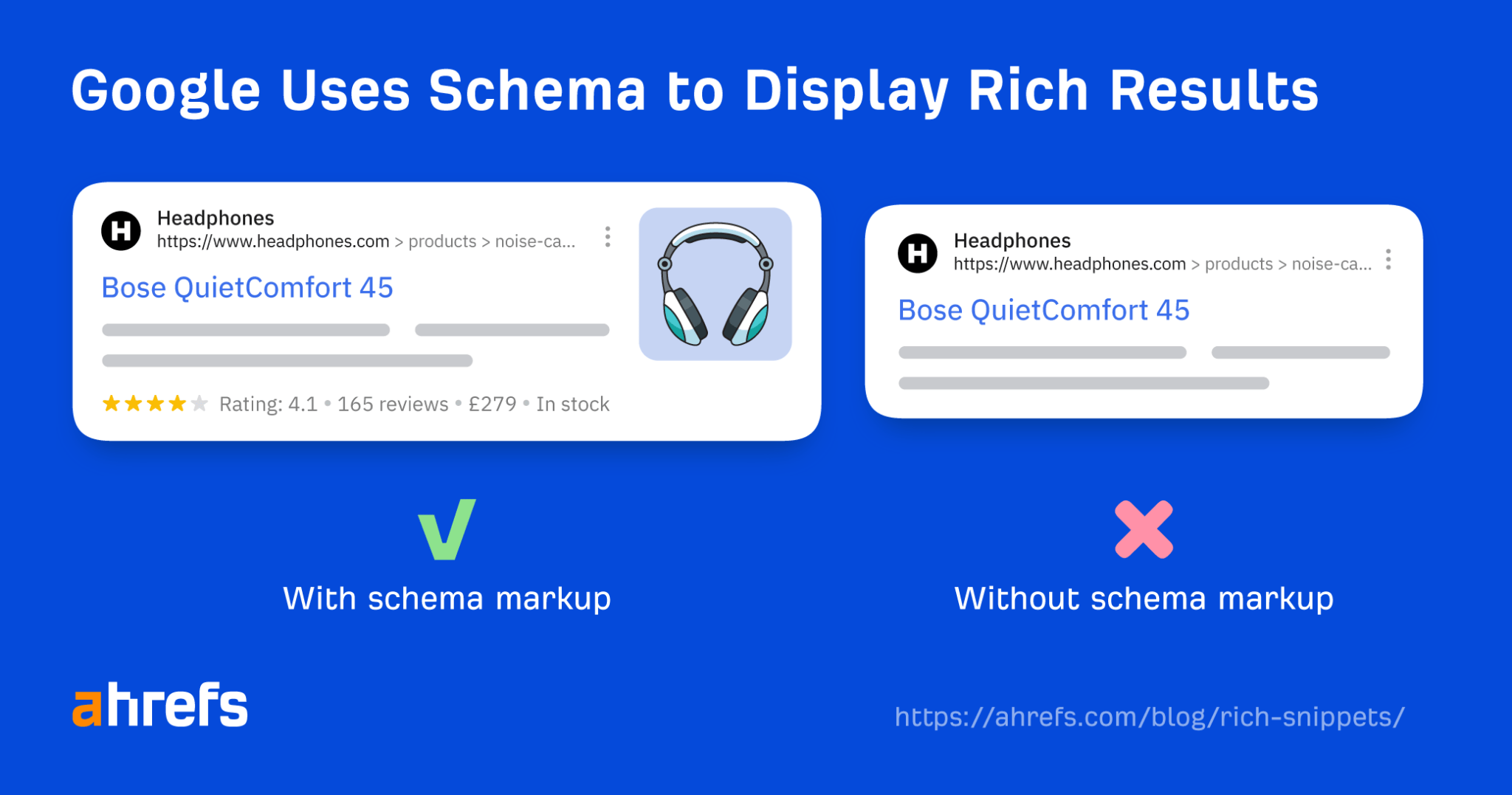
This is the language that allows Google’s AI to understand if your page is a product, a recipe, or a FAQ. This is how you obtain rich snippets (stars, prices) that boost your click-through rate.
4. Server Optimization: The “Layer 0” of SEO
It is often forgotten, but technical SEO starts long before the first pixel is displayed. Your hosting settings are your site’s engine: if it lacks power or proper configuration, everything else slows down.
TTFB (Time To First Byte)
This is the time it takes for your server to respond to Google’s first request. A TTFB that is too long is a major negative signal. For a site in Vietnam, the choice of server location (Saigon or Da Nang vs. Singapore or the USA) and the use of a CDN (Content Delivery Network) are determining factors in reducing latency.
Crawl Budget
Google allocates only a limited time to explore your site. A poorly optimized server with unstable response times will force Google’s bots to leave your site prematurely. Optimizing your server settings ensures that Google indexes 100% of your important pages effortlessly.
Modern Compression and Protocols
Enabling Gzip or Brotli compression at the server level can reduce the size of sent files by over 70%. Similarly, ensuring your server supports the HTTP/2 or HTTP/3 protocol is indispensable in 2026 to allow simultaneous loading of all your elements (images, scripts, CSS), thus boosting your Core Web Vitals scores.
What can an SEO agency do for you?
- Perform an SEO Audit: An SEO agency can help you create a keyword strategy to improve your SEO Marketing by targeting all expressions potentially searched for by your prospects.
- Install SEO Plugins: An SEO company will select SEO plugins to significantly improve your rankings. These can optimize a site quickly or provide guidance to improve your content.
- Optimize your images: Images can take up a lot of space on your hosting and slow down your websites if not optimized correctly. An SEO agency will ensure all images on your website are fully optimized for SEO.
- Optimize your code: Your website’s CSS, HTML, and Javascript code can be optimized to achieve better performance in terms of site architecture, navigation speed, and ranking.
- Perform “On-Page” optimizations: Every page of your site contains elements that can be optimized for SEO, such as meta descriptions, titles, URLs, etc.
- Register you with Google & Bing: Google offers a wide choice of services you can subscribe to in order to conduct in-depth studies of your site’s performance.
- Build Links: Link building (backlinks) is a vital part of your strategy to improve your site’s authority and traffic.
- Audit your Google Analytics data: Frequent analysis and tracking of your site’s data is crucial to understanding performance (and its evolution). This allows for detecting what needs to be fixed or improved.
- Write Content: Quality content is absolutely essential for successful SEO. Consider using a content specialist to produce articles, case studies, reviews, etc., to enrich and update your website.
- Optimize for SGE (Search Generative Experience): Adapting your content so it is cited in AI-generated responses from Google.
- Manage Local SEO & Google Maps: Essential for dominating proximity searches in dense cities like Da Nang, Saigon, or Hanoi.
- Audit Accessibility and UX: Because good SEO is useless if the user does not convert once on the site.

Is your SEO ready for Google’s new era?
In 2026, the difference between a stagnating site and a skyrocketing one lies in technical details and the relevance of local content. Whether you are in Saigon, Da Nang, or Hanoi, we master the subtleties of the Vietnamese market to propel your visibility.
Let’s take the next step together. Let’s discuss your goals and develop a tailor-made strategy that meets Google’s latest E-E-A-T criteria.
🚀 Contact our SEO specialists in Vietnam