Status of the French Presence in Asia
It is news to no one: the French are travelers at heart. Curious and enterprising, many take the plunge into expatriation.
According to the latest data from the Ministry for Europe and Foreign Affairs, 1,784,975 French citizens were registered in the Register of French Nationals Established Outside France as of December 31, 2025. This represents approximately 2.6% of the French population.
However, as registration in the consular register is not mandatory, these figures remains partial. Estimates from the Quai d’Orsay generally place the actual number of French people living abroad around 3 million people.
It should also be noted that most French expatriates settle for the long term: more than 1.23 million registered French citizens have lived in their country of residence for more than five years. Among them, approximately 7.6% chose the Asia-Oceania zone.
The French who have chosen to establish themselves in Asia therefore remain a minority. On a regional scale, the French community is distributed as follows:
- Europe (EU and non-EU): 46.6%
- Americas and Caribbean: 21.4%
- North Africa and Middle East: 16.1%
- Asia-Oceania: 7.6%
- Sub-Saharan Africa and Indian Ocean: 7.3%
French Presence in Vietnam
According to the register of French nationals established abroad, approximately 8,000 French citizens are officially registered in Vietnam with consular services.
As in most countries, this figure remains lower than reality since consular registration is optional. Several estimates therefore place the actual French community between 12,000 and 15,000 people in the country.
The French community is logically concentrated in Vietnam’s major metropolises.
French citizens live mainly in:
- Ho Chi Minh City, the country’s economic capital
- Hanoi, the political and administrative capital
- Da Nang, a fast-growing technological hub
- and in certain tourist destinations such as Nha Trang or Hoi An.
Here is how the French presence ranks in certain Asian countries:
- China – approx. 30,000
- Japan – approx. 15,000
- Thailand – approx. 14,000
- Singapore – approx. 13,000
- Vietnam – approx. 8,000
- Cambodia – approx. 5,000
- Philippines – approx. 3,000
French Companies in Vietnam
The current French economic presence in Vietnam dates back to the 1990s, when the French community was the first European community to establish itself in the country post-“Doi Moi,” seeking to take advantage of Vietnam’s brand-new opening policy. President Mitterrand’s visit to Hanoi in February 1993 is often considered the symbol of the early arrival and strength of the French in Vietnam at that time.
30 years later, the French economic presence remains significant, whether through subsidiaries of large groups or local companies created by French nationals.
According to various statistical sources, the stock of French Foreign Direct Investment (FDI) in Vietnam is estimated between 1 and 3 billion dollars. Estimates vary because some investments pass through regional hubs like Singapore, Hong Kong, or the Netherlands, making their true origin difficult to identify in official statistics.
According to Vietnamese data, France is currently the 16th largest foreign investor in Vietnam and the 2nd largest European investor behind the Netherlands. This position must, however, be put into perspective, as part of European investments transit through the Netherlands for tax and statistical reasons.
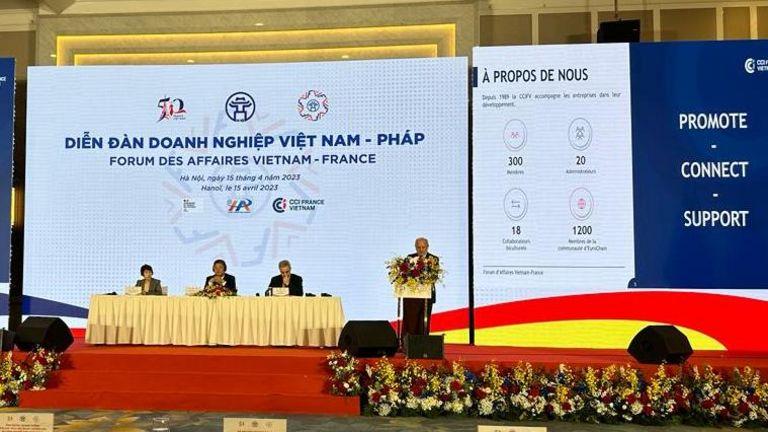
As for the French Chamber of Commerce and Industry in Vietnam (CCIFV), it currently has more than 250 member companies.
However, since membership is voluntary, this figure reflects only a portion of the French ecosystem. It is generally estimated that more than 600 French companies or companies with French capital are present in Vietnam, including subsidiaries of large groups, SMEs, and companies created by expatriate entrepreneurs.
How many French companies are present in Vietnam?
The French Chamber of Commerce in Vietnam (CCIFV) had just under 230 member companies in 2023.
This figure, however, represents only a portion of the French companies established in Vietnam. Indeed, membership in the CCIFV is voluntary and fee-based. Many French companies therefore choose not to register.
According to several estimates, more than 250 French companies have a direct presence in Vietnam, whether in the form of subsidiaries, representative offices, or industrial sites.
If we include local companies created by French or Franco-Vietnamese entrepreneurs, sometimes called “French Overseas Companies (EFE),” the French ecosystem becomes even broader. These companies alone represent up to 20,000 additional jobs in the country.
Several factors explain this interest:
- Sustained economic growth in Vietnam, around 5% in 2023 and more than 6% in 2024.
- A market of more than 100 million inhabitants, young and dynamic.
- A rapidly expanding middle class.
- The EU-Vietnam Free Trade Agreement (EVFTA), which entered into force in 2020, facilitating trade.
Major French Groups present in Vietnam
As Vietnam is one of the most dynamic markets in the ASEAN zone, it is logical to find a presence in the country, in one form or another, of almost all French CAC40 groups. Carrefour and Danone, without a presence in Vietnam, are among the exceptions. A few other groups are only in the country through distribution or assembly agreements, such as Renault or Hermès.
In total, approximately 30 CAC40 companies are physically present in Vietnam with establishments ranging from simple representative offices to production sites.
Local companies created by French nationals in Vietnam
But well beyond these world-renowned brands, Vietnam has many local companies founded by French nationals that have achieved resounding success. Les Vergers du Mékong, Marou Chocolate, the Annam Group, Celliers d’Asie, and many others are all French “Success Stories” in Vietnam.

DocShipper is also among those French people who have succeeded in Vietnam. This company offers Sourcing (supply assistance) and international transport services in Vietnam, providing dedicated support for importers/exporters.
Sectors of activity for French companies in Vietnam
- The Canal Plus Group has been established for several years in Vietnam through its subsidiary K+.
- The Decathlon Group produces part of its equipment in Vietnam and distributes it locally in its own stores.
- The Ubisoft Group inaugurated its first studio in Vietnam in 2020, in Da Nang, dedicated to the creation of mobile games.

As a result, the French community includes many entrepreneurs covering all industries, offering multiple opportunities to do business with compatriots. The network of the French community in Vietnam is rich and diverse, fostering collaborations in all economic fields, such as:
As a result, the French community includes many entrepreneurs and companies present in most economic sectors of the country. From large international groups to local SMEs created by expatriates, the French presence in Vietnam today covers a wide range of industries.
The French business community network in Vietnam is particularly dynamic, fostering collaborations between entrepreneurs, investors, and local partners in many areas:
Automotive and Industrial Equipment
Several French equipment manufacturers are present in Vietnam. Michelin has had a major plant since the acquisition of Camso in 2018. Groups like Valeo or Forvia also provide automotive components for the Vietnamese manufacturer VinFast and other players in the sector.
Health and the Pharmaceutical Industry
The healthcare sector represents a historical French presence in Vietnam. Groups such as Sanofi, Servier, Pierre Fabre, and BioMérieux develop production, research, and drug distribution activities there.
Logistics and Maritime Transport
In a country heavily focused on international trade, French companies also play a role in logistics. The CMA CGM group is notably present in several Vietnamese port terminals, while players like FM Logistic are developing their activities in supply chain management.
Aeronautics and Transport
Aeronautics is one of the most visible sectors of the French presence in Vietnam. Airbus supplies a large portion of the fleet for major Vietnamese airlines, notably Vietnam Airlines and VietJet Air, with more than 200 aircraft delivered or ordered. Safran is also present in the country through activities related to maintenance and aeronautical equipment. For its part, ADP Ingénierie, a subsidiary of the Aéroports de Paris group, participates in several airport infrastructure development and modernization projects.
Energy and Environment
Vietnam’s energy transition opens up many opportunities for French companies. EDF Renewables is studying several renewable energy projects, particularly in wind and solar power. Groups like Veolia and SUEZ are involved in water management, waste treatment, and environmental solutions in several major Vietnamese cities.
Agrifood Industry
The development of the Vietnamese middle class stimulates demand for quality food products. French groups like Bel (The Laughing Cow, Kiri), Lactalis, and Savencia are present in the Vietnamese market, often through local partnerships or distribution networks. Dairy and cheese products imported from France are experiencing steady growth among urban consumers.
Distribution and Luxury
The Vietnamese market attracts many French luxury brands. Groups like LVMH, Chanel, and Hermès have boutiques in major metropolises, benefiting from the rise of an affluent clientele. In distribution, Auchan left the market in 2019 after selling its local activities, illustrating the sector’s challenges for foreign players.
Digital and Tech
With the rapid rise of Vietnam’s digital economy, several French companies are positioning themselves in cutting-edge technologies. Thales operates in the fields of cybersecurity, defense, and intelligent transport systems. Digital services and consulting firms like Capgemini also support companies in their digital transformation. Vietnam also attracts many French entrepreneurs in the fields of software development, e-commerce, and startups.
Construction and Infrastructure
The rapid development of Vietnamese infrastructure offers many opportunities for French engineering and construction groups. Companies like Egis or Vinci Construction have participated in various engineering, urban infrastructure, and transport projects in several cities across the country.
The Impact of French Companies on the Vietnamese Economy
the French economic presence in Vietnam is not limited to a few large companies. Today, it plays a real role in the country’s economic development, whether through job creation, foreign investment, or skill transfers.
A Driver for Employment and Training
Subsidiaries of French companies in Vietnam employ approximately 26,000 people according to INSEE data (OFATS survey). If local companies created by French entrepreneurs are included, this figure could reach nearly 50,000 jobs.
Beyond job creation, these companies also participate in skill transfers through training programs, university partnerships, and academic exchanges.
Several French institutions are established in Vietnam, such as ESSEC Asia-Pacific in Singapore, which develops partnerships in the region, or the University of Science and Technology of Hanoi (USTH), often called the “France-Vietnam University,” created with support from France.
A Major Role in Foreign Investment
France ranks among the leading European investors in Vietnam. French companies have invested several billion euros in strategic sectors such as aeronautics, energy, infrastructure, agrifood, and services. These investments contribute to modernizing the Vietnamese economy and strengthening trade between the two countries.
Support for Innovation and the Entrepreneurial Ecosystem
The Vietnamese startup ecosystem is growing rapidly and attracting more and more French entrepreneurs. Initiatives such as La French Tech Vietnam, acceleration programs, and events organized by the French Chamber of Commerce and Industry in Vietnam (CCIFV) foster exchanges between entrepreneurs, investors, and local talent.
Sustainable Cooperation
Beyond economic activities, many French companies develop Corporate Social Responsibility (CSR) initiatives. These actions specifically target education, vocational training, energy transition, and environmental protection—major stakes for Vietnam’s sustainable development.
Working in French Companies in Vietnam
Working for French companies in Vietnam is a question we are often asked by French-speaking Vietnamese or French nationals wishing to expatriate to Vietnam. Allow us to clarify a few misconceptions on this subject:
Myth #1: French is the primary language in French companies in Vietnam
In reality, the language of business is English, and Vietnam is no exception to this rule. In almost all French companies in Vietnam, the working language is English. Proficiency in French can be an asset in these structures, but only if you already speak English fluently.
Myth #2: Finding a job in Vietnam is easy for a Frenchman.
Unfortunately, even though the Vietnamese economy has seen remarkable growth in recent years, there aren’t necessarily many positions tailored to French expatriate profiles.
Myth #3: Companies easily hire foreign expatriates
Employing a foreign worker also involves more complex administrative procedures for companies. Employers must notably obtain a work permit and demonstrate that the position requires specific skills that cannot be easily found on the local market.
In practice, positions held by expatriates often concern specific functions:
- International direction or management
- Specific technical expertise
- Regional business development
- Transfer of skills within a subsidiary
Myth #4: Only teaching recruits foreigners in Vietnam
Some sectors have historically employed more foreign workers. This is particularly the case for language teaching, especially English, which remains in high demand in large cities like Ho Chi Minh City and Hanoi.
Other opportunities also exist in the fields of tech, engineering, international education, or consulting, but they remain relatively limited and are often reserved for experienced profiles.
How to find a job in Vietnam?
- Apply spontaneously: Do not hesitate to send unsolicited applications to French companies present in Vietnam. Send them your CV and cover letter directly. This proactive approach can allow you to seize offers that are not published online.
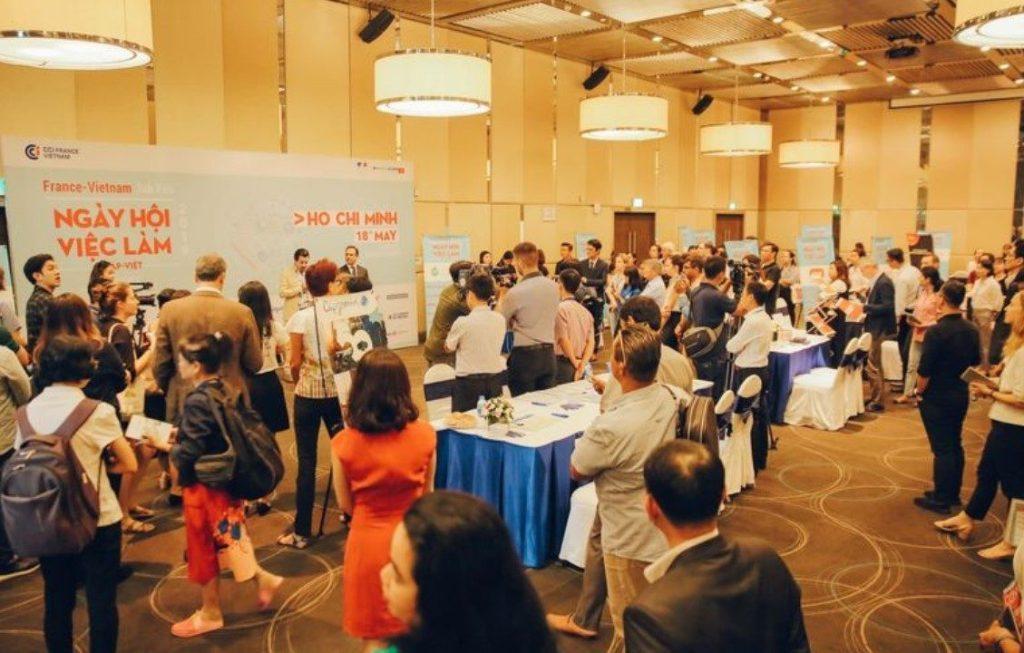
- French Chamber of Commerce in Vietnam: The French Chamber of Commerce in Vietnam (CCIFV) can be a valuable resource for your job search. It brings together many French companies and offers an employment service that regularly organizes France-Vietnam Job Forums. However, it is important to understand that its role is to help its members find qualified profiles, mainly locals. It is not a local branch of the French unemployment office (Pôle Emploi) specifically helping French people find jobs in the country.
- Recruitment agencies: International recruitment firms such as Adecco and Manpower can also be an option to explore. These agencies are present in Vietnam and are actively used by large international groups established in the country. Additionally, many headhunting firms exist that can also assist in your job search.
The Importance of Networking and Being on the Ground
To conclude, if we had only one piece of advice to give in this field: Get out there and attend the many events gathering the French business community in Vietnam. Introduce yourself and let it be known that you are looking for work. Building a network is the best way to find a job. This is true everywhere, but even more so in Vietnam.
Starting a Business in Vietnam as a French National (or Foreigner)
This is a complex issue that deserves an article of its own. To summarize the matter: yes, it is possible to start a company in Vietnam.
However, the difficulty of the project will depend on your sector of activity and the initial capital invested. Many entrepreneurs choose to partner with a local to simplify procedures. It is important to note that while this can indeed facilitate the process, it is not an indispensable requirement in most sectors.
To cover this subject in detail, we have published a comprehensive guide entitled “How to start a business in Vietnam?”.
This guide will provide detailed information and practical advice to help you understand the different stages and legal aspects related to starting a business in Vietnam.
Furthermore, it is interesting to note that many people choose to live in Vietnam while working online for companies based abroad. If you wish to explore this option, we have also published a detailed report on the subject: “Working as a Digital Nomad in Vietnam: The Complete Guide”.
Reasons for French Success in Vietnam
An Explosive Vietnamese Economic Environment
Entrepreneurship in Vietnam means operating in a market of 100 million inhabitants, which is already a wealth in itself. But it also means operating in an economy where growth has oscillated between 6 to 7% per year in recent years. And this figure even hits double digits regarding its main cities: Hanoi and Ho Chi Minh City.
With an emerging middle class and such a level of growth, the outlook is bright for entrepreneurs. The legal and tax environment also seems favorable, notably with corporate tax at 20%, employment conditions that are obviously less restrictive than in France, and reduced costs for almost all goods and services.
Infrastructure and internet access are also constantly improving in this context, and real estate projects are booming. Vietnam’s economy is also diversifying more and more: in 2018, the primary sector (agriculture, fishing, minerals…) represented 38.6% of the active population and 15% of GDP, compared to 26.7% and 39% for the secondary sector (industry) and 34.7% / 44% for the tertiary sector (services).

Thus, among its flagship industries and exports, Vietnam can count on the production of electronic and telephone equipment, clothing, vehicles, wooden furniture, oil, steel, and traditional coffee, rice, vegetables, and seafood. Investment sectors are therefore manifold, with a solid base and new opportunities, particularly in the services sector. Neighbors from Korea, Japan, and even China have caught on and are massively relocating to Vietnam. Samsung, Canon, Nike, Peugeot… many are the international companies that have recently established themselves in the land of the dragon.
All these factors combined give any entrepreneur both the desire and the means to develop their own activity in Vietnam.
The “France” Brand and its Image of Prestige
The Vietnamese population is probably one of the most welcoming in the world and possesses a true fascination for the “France brand,” which it genuinely esteems. To this day, many legacies of French culture bear witness to the tricolor presence in Vietnam, particularly in architecture and gastronomy, and even in language. Diplomatic and economic relations between the two countries are also at their peak.
Thus, having a French name for one’s company is extremely common in Vietnam, even for foreign brands that play on this image, such as “Tous les Jours,” a bakery chain from… Korea.
Today, statistically speaking, not very francophone but still francophile, Vietnamese people are fond of French products and services, and many still maintain ties with France. Friends or family living in France create a real cultural bridge that persists between the two countries. This is particularly the case for the “Viet Kieu,” those descendants of Vietnamese immigrants who return to Vietnam with their French passports, culture, and education.
In Asia perhaps more than anywhere else, France and the French enjoy a brand image that facilitates entry into the business world. Consequently, you will never be a victim of discrimination or racism as a French expatriate, and Vietnamese people will be the first to come and try your products or services. Living as a Frenchman in Vietnam is therefore very pleasant, as you will also have no trouble finding products from the motherland.

A Supportive Community with Multiple Talents and Entrepreneurial Drive
7,000, 10,000, or undoubtedly even more… the size of the French community in Vietnam resembles that of a small provincial town. Very quickly, the same names and faces reappear, helping to create a cordial, if not warm, atmosphere.
Naturally, abroad, ties between expatriates are strengthened by sharing this common experience, smoothing human relationships. And in this small town resides a population that is curious by nature, often more educated than average, and eminently more adventurous.
All this creates the perfect cocktail for entrepreneurship and building a solid professional network. And there is no shortage of institutions or groups for meeting professionals. Chamber of Commerce, Association of French Nationals Abroad, French Institute, numerous events, or local press… the French landscape is very widely represented in Vietnam (see useful links at the bottom of the article).
Architects, artists, restaurateurs, doctors, financial directors, engineers of all kinds, web professionals, lawyers, merchants… nothing is missing from the skill set in Vietnam, reflecting the diversification and dynamism of its economy. Almost any project can be carried out from start to finish solely by calling on French nationals. And in such an environment, news travels fast. Consequently, good or bad partners are often quickly identified.

A Common Work Ethic
Doing business with the French community in Vietnam means dealing with interlocutors whom you understand.
Because beyond the obvious language barrier—knowing that dialogue most often takes place in English—business codes differ greatly between French and Vietnamese culture. One must therefore arm themselves with patience and use tact to avoid offending Vietnamese counterparts and to understand them correctly.
In her book “East vs West,” Yang Liu, a Chinese designer living in Germany, simply exposes the cultural differences between East and West, particularly regarding the business world:

Since changing habits takes time (when it’s even possible), you can count on the French network for business ventures or to get help. Again, the role of the Viet Kieu proves decisive, creating a real bridge between French and Vietnamese collaborators. This might mean, for example, using the services of a Viet Kieu lawyer who speaks French and Vietnamese to set up a business in Vietnam with a local firm and facilitate all the thorny administrative procedures.
Conclusion
Establishing oneself in an international market like Vietnam requires a well-oiled digital strategy, adapted to local specificities while maintaining a strong identity.
This is where Knok Studios comes in, a French-speaking web agency specialized in digital marketing.
From creating high-performance websites to managing SEO and SEA campaigns, including engaging content production, Knok Studios supports French and international companies in their development in Southeast Asia.
Thanks to sharp expertise and a perfect understanding of local expectations, our team helps you maximize your visibility and achieve your growth objectives.
If you want to give a new boost to your digital strategy in Asia, Knok Studios is the partner you need!
BONUS: Interview with one of the co-founders of KNOK STUDIOS (formerly LesMichels.fr), Arnault Barthoulot, speaking as a French entrepreneur in Vietnam
Read also:
Useful Links for the French Community in Vietnam:
- Association of French Nationals Living Abroad (Saigon)
- Union of French Nationals Abroad – Vietnam section
- Chamber of Commerce and Industry in Vietnam
- French Embassy in Vietnam (Hanoi)
- French Consulate in Vietnam (Ho Chi Minh City)
- Le Petit Journal
- Le Courrier du Vietnam
- La French Tech Vietnam
Facebook Groups for French People in Vietnam:
- French in Saigon / The French of Vietnam (8,400 members)
- Francophones in Vietnam (48,600 members)
- French Expats in Vietnam (9,200 members)